

Welcome to Magasin Interiors. In a dedicated monthly send, Xavier Donnelly shares his latest on-the-ground intel, dives deep into a timely interiors topic, and pulls together a useful edit of resources from his vast network.
First up…
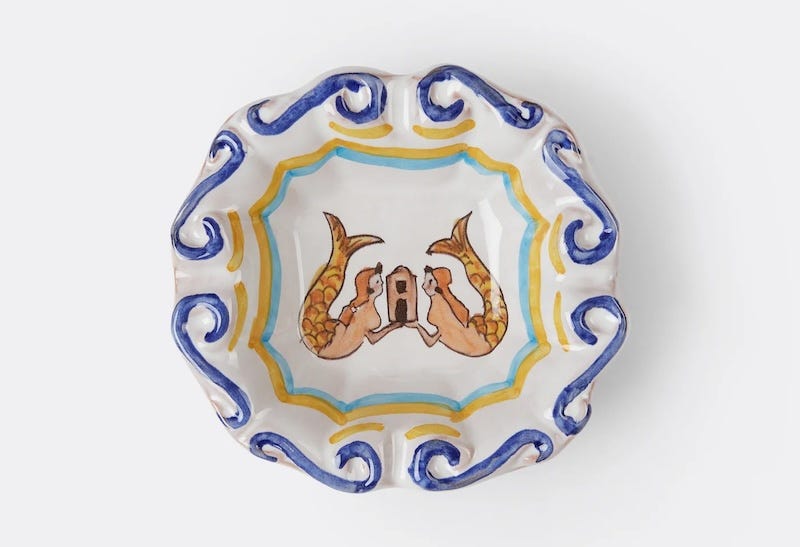
Le Sirenuse, one of the best places I’ve ever had the pleasure of staying, celebrated its 75th this year. Even if you haven’t visited, you should get the hand-painted ashtray.
My screenshots folder is full of Instagram caps from my more aesthetically attuned friends’ holidays—sort of a crowd-sourced reference library. I saw Beverly Nguyen of Beverly’s 1975 shopping at the dream store Seghezzo in Ste. Margherita Ligure, and caught filmmaker Nora Delighter buying vintage buoys from Maine, no doubt swept away in the cold, briny tide of New England coastal romance. I also spoke to “NYC’s toughest doorman” Frankie Carattini about the covetable ashtray he brought home from the Hotel Corazon in Mallorca, which has a pretty fabulous shop. As he rightly put it, it must be a rare and special ashtray to retail for above $100, but there’s no better feeling than being so taken by a place that you must take it back with you. For my part, I’ve picked up a few gems this summer: a silver art deco champagne bucket from a brocante in Nice, a large hand-turned wooden salad bowl from Vermont, and a small tiled planter from Begur in the Costa Brava.
Souvenirs of summer
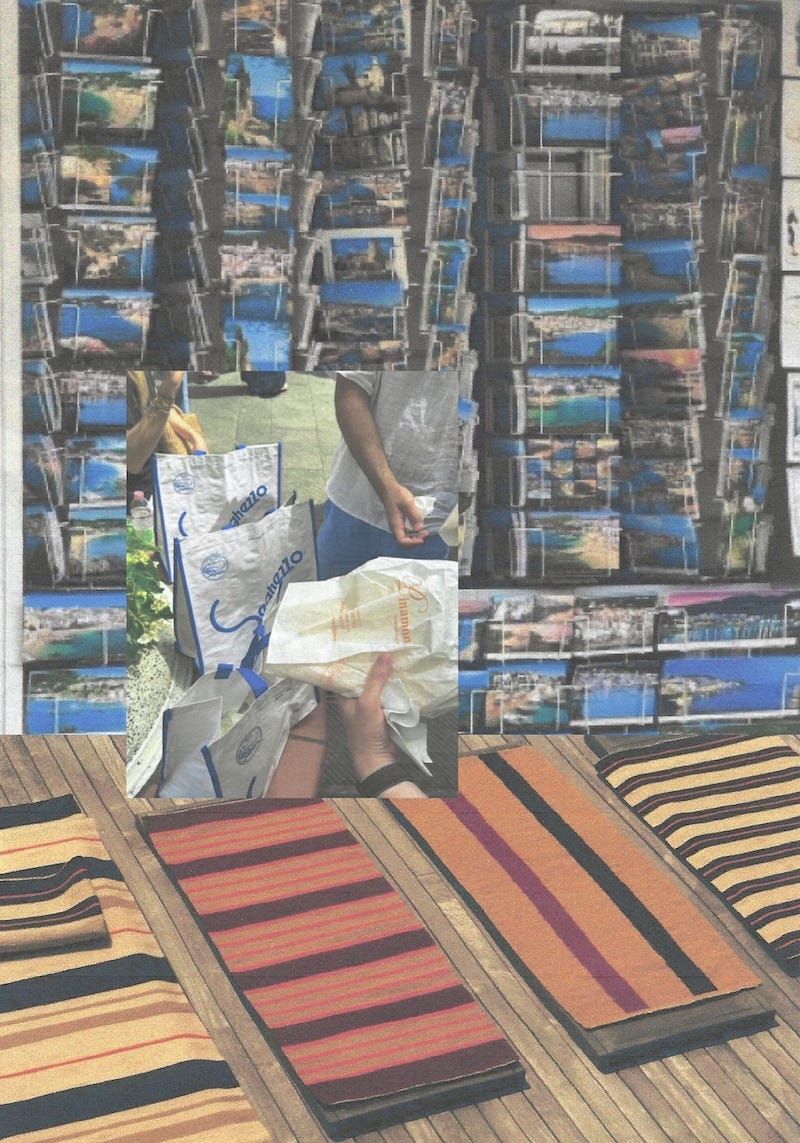
Who doesn’t love to grab a little piece of a summer holiday and bring it back home? It’s a reminder of that summer feeling—momentarily bringing you to a childhood place of freedom, carelessness, and wild, hot fun. The objects that I find most compelling have succeeded in capturing the essence of summer—that 6 p.m. golden haze (like this rug from Beni), the sensation of surrendering to slowness (seaglass and rope bracelets from Levant), the symphony of insects and creatures in the brush (these Laguna B glasses are what I think that sound looks like), or the prickly warmth of saltwater drying on your skin (this Essenzialmente Laura perfume smells exactly like it).
Sometimes that’s a straightforward proposition, like in the case of the ceramic dolphin light fixtures at Malta’s new jewel Casa Bonavita, which fit nicely in a carry-on, or the quilted coverlets at Salt Water Farm that ensure a cosy, deep sleep on cool Maine nights. (Here are some alternative options from Toast, Williams-Sonoma, and Magniberg, all of which could take a turn as a picnic blanket.) After a stay at the exquisitely furnished Finca Victoria in Spain earlier this year, I’m seeking a literal reminder of my time by the sea in the form of a model sailboat to place in front of a picture window.
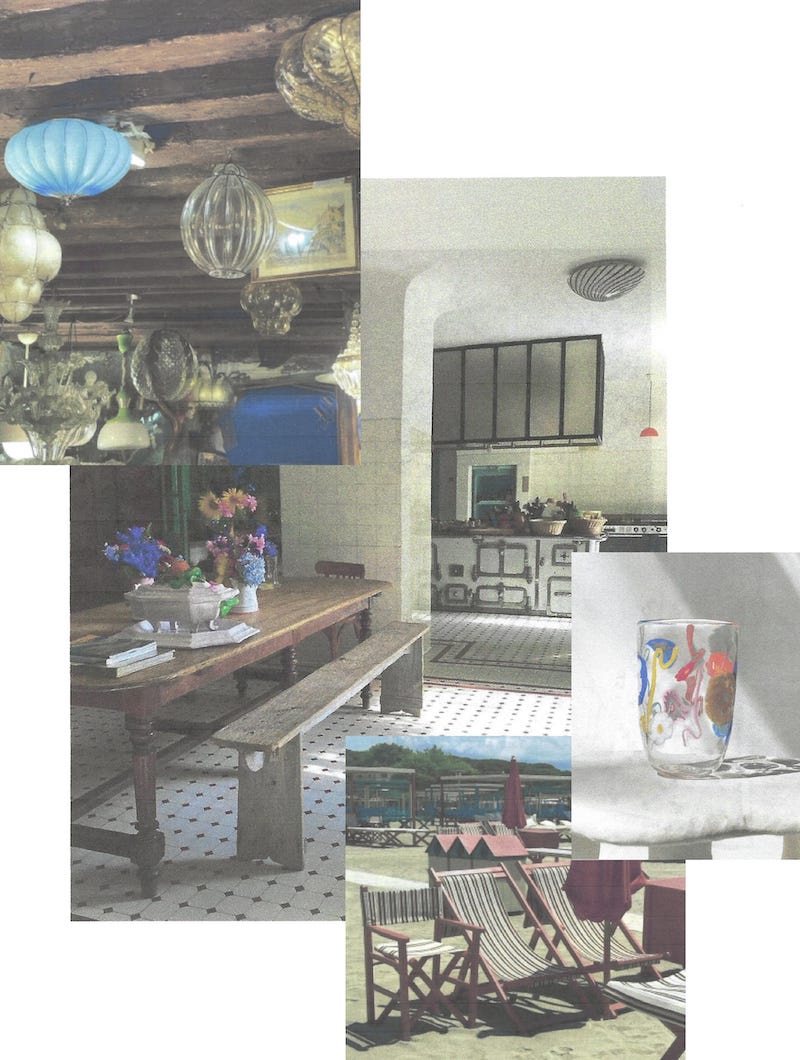
More often than not, your summer crushes simply won’t fit in a suitcase and you have to leave them at the beach, like the exuberantly clashing sun loungers at Casa Lawa in Sicily (I believe the fabric is Dedar) or the swirled Murano glass flush mount lights firmly affixed to the ceiling at Villa Magnan in Biarritz.
In that case, the best you can do is hold on to the concept, understand why it was successful, and try to imagine it in the context of your real life. As an example, let’s take window dressings: Often the best summer places don’t have air conditioning, and in the heat of July you want to tempt in any wayward breeze with windows flung open. A rented cottage at Sea Ranch in Northern California had no-nonsense roll up bamboo shades which, like everything at Sea Ranch, perfectly complemented the landscape. At Inness in Upstate NY, the curtains are hung from two pegs on either side of the window with a helpful drapery wand to help you hook them back. A brilliantly casual solution.
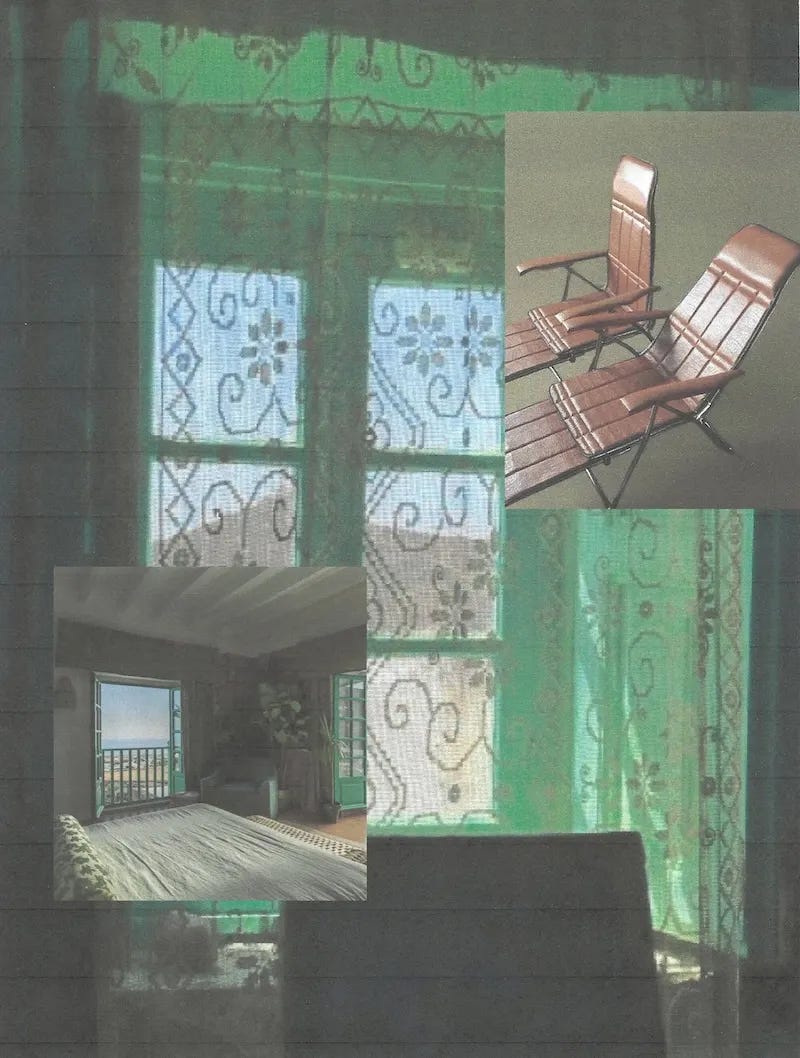
At the Hotel Cezar, which overlooks the eastern Atlantic on the hot, windswept island of Lanzarote, a simple linen valence is hung above the windows to help frame the view while filling the awkward space between the window frame and the ceiling. I would opt to have my local tailor whip this up from the fabric of my choosing, but a quick and cheap solution is available on Amazon.
Each year, after 3 months of spending every possible minute outdoors, I always think that some of the summer outdoor furniture could live just as nicely inside year-round. I find much of our common outdoor furniture to have pleasing silhouettes: Consider the sling beach chair, with its elegant drape. (Side note: For the big spenders out there, Loro Piana is now selling the sling chairs that I saw on the beach next to the Hotel Augustus in Forte dei Marmi a couple of years ago for $5,300 each.)
Or, take the infamous monobloc chair in its infinite varieties. In the right context, it would be an incredible dining set. Chic and simple outdoor furniture is inherently cool, confidently uncomplicated. My ideal outdoor table is the narrow, collapsible model that was set up outside the ultra glamorous alpine hotel Chesa Grischuna (look into who has stayed there and you’ll get it) in Klosters, which the Germans invented for biergartens. I can’t resist a good folding director’s chair. Some of these pieces are surprisingly delicate in form—but in a sporty way that reminds me of my favorite beach clubs, like this leather and aluminum Italian recliner, this metal and teak chair/footstool set, and this indoor/outdoor bamboo loveseat (the frame is reminiscent of the lightweight upholstered bamboo furniture at Beit Trad in the hills above Beirut).


Alessandro Moriconi, the designer behind the transporting Belmond Castello di Casole, explained the importance of detail in expressing an essence, as evidenced by his favorite piece from that hotel: a rare sculptural stainless steel vase (similar pieces here and here on 1stDibs). As he put it, “I have always been drawn to objects that don't ask for attention, yet quietly transform a room. This vase belongs to that rare category. Formed from a single folded sheet of metal, its beauty lies in restraint rather than ornament. It doesn't frame the flower, it completes it. To me, the most enduring objects are those that leave enough space for light, shadow, and seasonality to become part of their composition. It stayed with me long after I left, and eventually found its way into the interiors of our hospitality project at Belmond Castello di Casole—a reminder that the best discoveries rarely remain souvenirs, they become part of your own visual language.”
The Directory — switchcovers
A recent project led me on a hunt for nice-looking switchcovers. It’s a detail that’s often overlooked but easy to change out, and does wonders to elevate an oft-used touchpoint in the home. Below are the best resources for finding upscale, period, and nice-looking switchcovers.
Historic Houseparts
These guys have a wide range of period-inspired options, but the ones I really like are the glazed ceramic line, which is available in many different colors.
House of Antique Hardware
Best for Victorian or Art deco repros, great if that’s the architectural vernacular of your house.
Switch Hits
Probably the widest range of finish options, including mirror, ceramic, and stone.
Forbes & Lomax
Very high-end switchplates. They may require a bit more reworking to use them, but they look and feel luxurious and differentiated.
Rejuvenation
A good selection of styles and finishes.
Mejlac
Another higher end manufacturer, specializing in a very polished, European look.
Magasin may earn some money if you make a purchase through one of the links above.
Follow us on Instagram at @magasin.ltd.

I just posted a note on this sentiment- ‘I don’t buy things to own them, I buy them to remember.’ Lovely round-up, I also love Le Sirenuse!!
Love!